
Introduction to the B2K-ZOP3.2.03.5 Model
The B2K-ZOP3.2.03.5 model represents a significant framework that has been developed to address specific challenges within its field. Understanding what is B2K-ZOP3.2.03.5 model requires an exploration of its origins, evolution, and the pressing issues it was designed to tackle. Initially conceptualized to optimize operational efficiency, the model has undergone various iterations, each enhancing its complexity and application across different sectors.
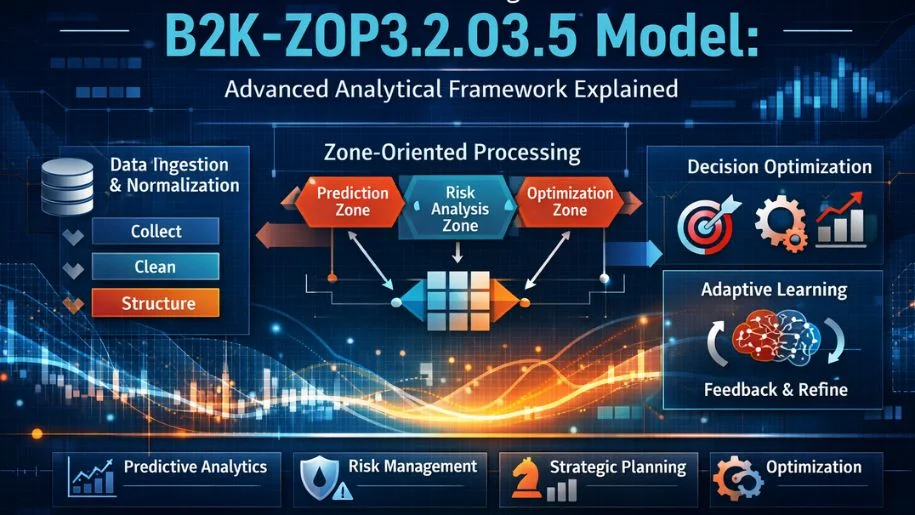
This model integrates multiple components, each serving a distinct role in its overall functionality. The architecture is built on foundational theories that emphasize data-driven decision-making and real-time analytics. By employing various algorithms, the B2K-ZOP3.2.03.5 framework enables precise forecasting and scenario simulation, which are critical in identifying potential outcomes before they occur.
In terms of practical applications, what is B2K-ZOP3.2.03.5 model can be observed in industries such as manufacturing, logistics, and marketing. Its relevance is underscored by its capacity to streamline processes, reduce costs, and improve productivity. Organizations that have adopted this model have reported not only enhanced operational efficiency but also a greater ability to adapt to market demands swiftly.
Thus, the B2K-ZOP3.2.03.5 model stands as a testament to innovative problem-solving within its discipline. An understanding of its components and functions lays the groundwork for deeper exploration into its capabilities and impact on contemporary practices. As industries continue to evolve, the significance of this model will undoubtedly grow, further highlighting the need to comprehend its mechanics and applications.
Key Features of the B2K-ZOP3.2.03.5 Model
The B2K-ZOP3.2.03.5 model represents a significant advancement in its field, characterized by a range of unique features that set it apart from its competitors. One of the standout attributes of this model is its robust architecture, which incorporates state-of-the-art technology designed to enhance performance and usability. This architecture not only facilitates high efficiency but also ensures reliability across various applications.
Another notable feature is its adaptive learning capability, which allows the B2K-ZOP3.2.03.5 model to fine-tune its operations based on real-time data inputs. This means that users can expect improved outcomes as the model learns and evolves, making it highly effective for dynamic environments. Furthermore, the model comes equipped with a user-friendly interface, simplifying interaction for users across different levels of expertise.
Technical specifications of the B2K-ZOP3.2.03.5 model highlight its impressive processing power, featuring advanced algorithms that enable complex data analysis with greater speed. Additionally, its compact design ensures it can easily integrate into existing systems without requiring extensive modifications. The emphasis on scalability allows organizations to adapt the B2K-ZOP3.2.03.5 model to their varying needs, supporting both small-scale projects and large enterprise applications effortlessly.
Moreover, the B2K-ZOP3.2.03.5 model offers enhanced security protocols, addressing critical issues surrounding data protection. This includes encryption features and access controls that safeguard sensitive information from potential threats. Collectively, these attributes give the B2K-ZOP3.2.03.5 model a competitive edge, underscoring its position as a preferred choice for users seeking innovative solutions in the industry.
Applications of the B2K-ZOP3.2.03.5 Model

The B2K-ZOP3.2.03.5 model has found significant applications across a variety of industries, exemplifying its versatility and effectiveness in solving complex challenges. One prominent area of application is in supply chain management. Here, the model assists businesses in optimizing their logistics and inventory processes, enabling them to respond more adeptly to changing market demands. By utilizing the efficiencies derived from the B2K-ZOP3.2.03.5 model, companies can reduce costs and improve delivery times, ultimately enhancing customer satisfaction.
In the realm of healthcare, the B2K-ZOP3.2.03.5 model has been instrumental in improving operational efficiency. By integrating this model into hospital management systems, healthcare providers can streamline patient flow and enhance resource allocation. This application not only leads to improved patient outcomes but also supports the healthcare staff in delivering high-quality services efficiently. For instance, medical facilities employing this model have reported a decrease in wait times, thereby increasing access to necessary treatments.
Additionally, the B2K-ZOP3.2.03.5 model is being utilized within the financial services sector. Financial institutions leverage the model for risk assessment and management, allowing them to better predict market trends and contribute to more informed decision-making. The enhanced analytical capabilities afforded by the model equip organizations to recognize emerging risks earlier, ultimately fostering a more resilient financial environment.
Furthermore, educational institutions are incorporating the B2K-ZOP3.2.03.5 model to enhance learning outcomes through data-driven decision-making. By applying this model, schools and universities can better analyze student performance data, thus personalizing learning approaches and ensuring that educational goals are met effectively.
Future Prospects and Innovations Related to the B2K-ZOP3.2.03.5 Model
The B2K-ZOP3.2.03.5 model is poised at the intersection of advanced technology and innovative research. As industries continually evolve, so does the potential for this model to adapt and improve. Ongoing research initiatives are focused on enhancing the model’s accuracy and efficiency, with possibilities for optimization in various applications. Scholars and researchers are exploring complex algorithms and artificial intelligence integration, which may significantly increase the model’s usability and effectiveness.
In addition to technological enhancements, the B2K-ZOP3.2.03.5 model may find innovative applications across different sectors. For example, healthcare professionals are investigating how the model can analyze large datasets for more effective patient care strategies. Similarly, industries such as finance and environmental sciences are beginning to implement the model to predict trends and outcomes with greater reliability. These explorations could further validate the model’s robustness and adaptability to future demands.
Expert opinions suggest that the B2K-ZOP3.2.03.5 model is set to remain relevant in the face of rapid technological advancements. As organizations increasingly rely on sophisticated data analysis, the need for reliable models like B2K-ZOP3.2.03.5 will continue to grow. Furthermore, the introduction of machine learning techniques could allow the model to evolve in real-time, thereby enhancing its accuracy over time. It is anticipated that, with proper updates and enhancements, the model will maintain its place as a vital tool within various disciplines, corroborating its longevity in an ever-changing landscape.